Tag: PC

What Is the Animus Hub? Inside Ubisoft’s Connected Ecosystem

What Is the Animus Hub? Inside Ubisoft’s Connected Ecosystem

If you game across multiple platforms or launch a modern franchise, you’ve likely felt the fatigue of cluttered menus, separate launchers, and disjointed live-service bloat. For years, Ubisoft’s mysterious project known as Assassin’s Creed Infinity loomed on the horizon like a nebulous corporate buzzword.

Now that it has materialized into the Animus Hub—serving as the connective tissue for recent releases like Assassin’s Creed Shadows and Black Flag Resynced, while prepping for future tentpoles like Codename Hexe and Codename Invictus—it’s time to look past the marketing jargon.

What actually is the Animus Hub, how does it work, and why is it shaping the future of the entire franchise? Let’s break it down.

From “Infinity” to the Animus Hub: The Evolution

First leaked back in 2021 under the working title Project Infinity, the concept went through several iterations before Ubisoft officially branded it the Animus Hub.

Instead of being a separate, free-to-play standalone game or a clunky external launcher, Ubisoft built the Hub as an in-universe interface. Operating as a hacked version of Abstergo’s modern-day tech (the Animus EGO), the Hub acts as your unified control center. It bridges historical simulations, modern-day narrative threads, and community rewards into a single dashboard.

How the Animus Hub is Structured

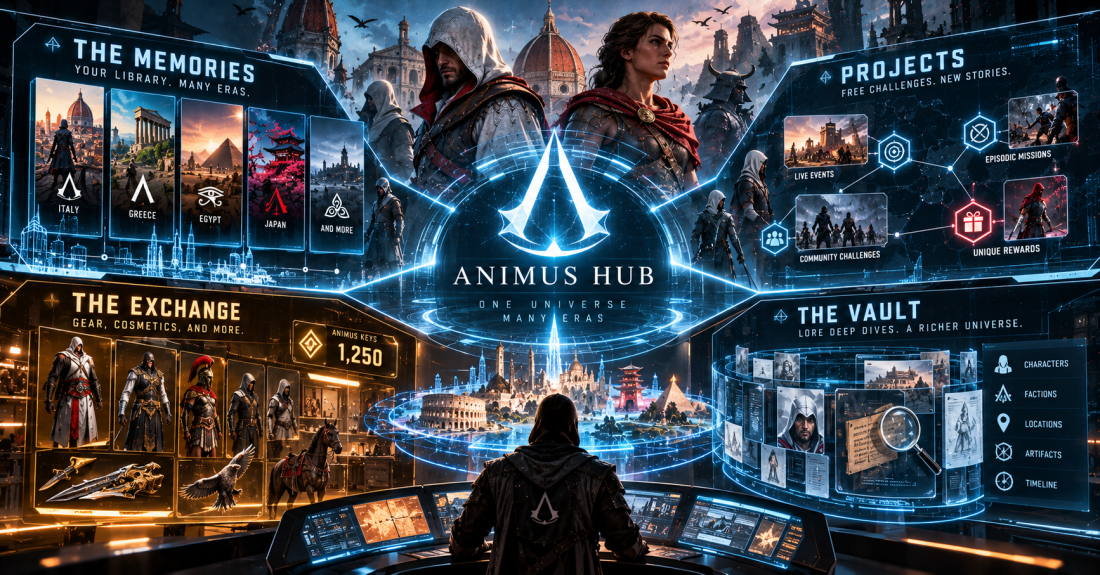
To understand what the Hub actually does day-to-day, it helps to look at its four core sections:

  • The Memories (Your Library): This serves as your master library launcher. If you have supported titles downloaded on your system—ranging from classic historical entries to recent current-gen releases—you can boot and manage them directly through the Hub interface with cross-platform progression support.
  • Projects (Free In-Game Challenges): This is where Ubisoft drops episodic, in-game missions and anomalies. Crucially, Ubisoft structured these projects so that they are entirely free—no paywalls or microtransactions required. Completing these challenges earns you keys and data fragments while advancing the modern-day narrative.
  • The Exchange (The In-Game Shop): The keys you earn from playing Projects can be spent here on rotating daily and weekly gear, weapons, outfits, and visual customization items. Again, all items are unlocked strictly through gameplay.
  • The Vault (Lore Deep Dives): For fans who miss the dense lore entries and database text files of earlier games, the Vault stores all decrypted data files, text, images, and narrative secrets uncovered during your playthroughs.

Why the Animus Hub is Crucial for Hexe and Invictus

The ultimate goal of the Animus Hub isn’t just to launch older games; it is to act as the foundational platform for everything coming next in the franchise.

  • Hosting Codename Hexe: When Ubisoft’s dark, gothic psychological thriller set during the 16th-century witch trials launches, it will plug directly into the Animus Hub ecosystem, allowing players to jump straight from historical sandboxes into the core interface.
  • Powering Codename Invictus: The Hub is designed to seamlessly integrate standalone multiplayer experiences like Invictus, serving as the universal lobby and matchmaking anchor where cross-era characters and modes collide.
  • Reviving Modern-Day Storytelling: For years, fans have complained that the modern-day framing device felt disjointed or shoehorned into individual games. By housing narrative-driven Anomalies and Vault files within a persistent hub, Ubisoft has a centralized space to tell ongoing modern-day stories.

Frequently Asked Questions (FAQ)

Do I have to pay to use the Animus Hub?

No. The Animus Hub itself is a free interface. While individual games launched through it (like Shadows or Black Flag Resynced) require purchase, the Hub’s internal features, reward tracks (Projects), and cosmetic shop (Exchange) rely entirely on in-game progression rather than microtransactions.

Can I launch older Assassin’s Creed games from the Animus Hub?

Yes. The Hub is designed to recognize and launch supported titles on your system, acting as a master control panel for your historical adventures.

Will future games like Hexe require the Animus Hub?

Yes, Ubisoft has emphasized that upcoming tentpoles like Codename Hexe and Codename Invictus will be fully integrated into the Animus Hub ecosystem.
Ubisoft 2027 Release Slate: Hexe, Far Cry 7 & Roadmap

Ubisoft 2027 Release Slate: Hexe, Far Cry 7 & Roadmap

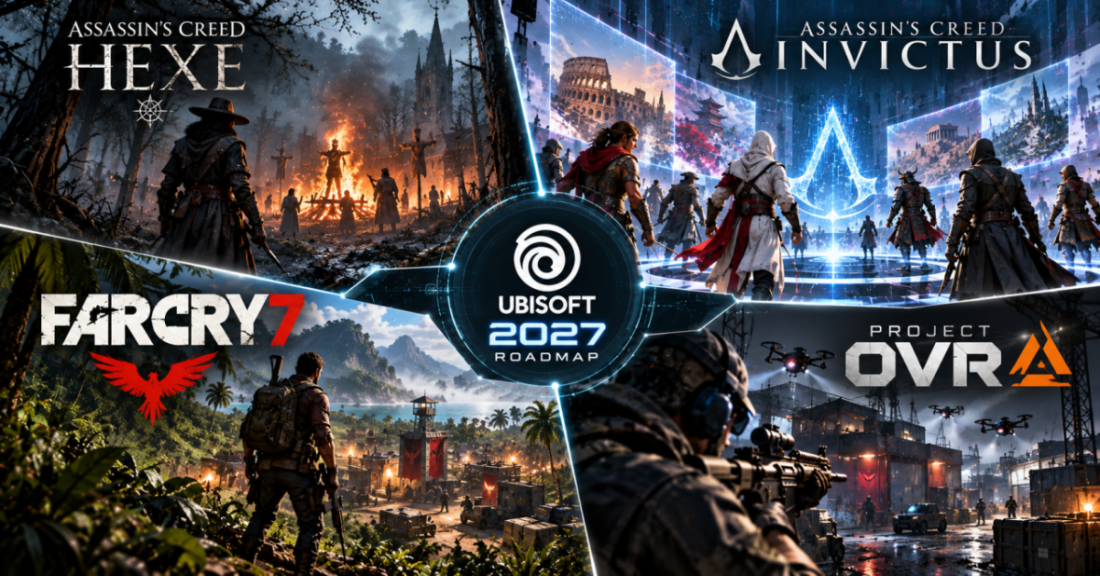
Ubisoft’s 2027 Release Slate: Hexe, Far Cry 7, and Everything Coming Next

For the last few years, talking about Ubisoft usually meant discussing delayed release dates, internal restructurings, and sprawling open-world roadmaps that left players fatigued. But looking ahead to 2027, the publisher is quietly setting up one of its most critical—and potentially exciting—windows in over a decade.

Rather than sticking strictly to the formulaic open-world templates of the past, Ubisoft is shifting gears toward targeted, diverse experiences. From gothic historical thrillers to long-awaited shooter revamps, here is a complete breakdown of Ubisoft’s upcoming release slate and the heavy-hitting games anchoring the next few years.

The Tentpoles: Hexe and Far Cry 7

Ubisoft’s upcoming strategy hinges heavily on two major pillars designed to satisfy two very different segments of its player base:

1. Assassin’s Creed Codename Hexe

Following the massive open-world footprint of games like Shadows, Ubisoft is taking a sharp U-turn with Hexe. Set in 16th-century Germany during the harrowing height of the European witch trials, this mainline entry is ditching the traditional RPG bloat. Industry leaks indicate it will feature a tighter, more linear, and atmospheric narrative structure focused on psychological tension and stealth.

2. Far Cry 7 (Project Blackbird)

It has been a significant wait since Far Cry 6 launched in 2021, marking one of the longest gaps between mainline entries in the franchise’s history. Codenamed Blackbird, the next iteration of the chaotic first-person sandbox is being developed alongside a shifting publisher roadmap. While official details remain closely guarded, the project is expected to inject fresh blood into the series’ signature formula of rebellion, dynamic AI, and open-ended chaos.

Expanding the Ecosystem: Multiplayer, Remakes, and Tactical Spin-Offs

Beyond the two major tentpole releases, Ubisoft’s upcoming schedule includes targeted genre experiments designed to diversify its catalog:

  • Assassin’s Creed Codename Invictus: Built as a standalone, arcade-style multiplayer experience led by For Honor veterans, Invictus will plug directly into the central Animus Hub, bringing cross-era tactical social stealth back to the forefront.
  • Project Ovr (The Next Mainline Ghost Recon): Reports indicate that Ubisoft is looking to revitalize its tactical shooter franchise, with the next Ghost Recon aiming for a gritty first-person perspective that leans heavier into realistic tactical combat.
  • Classic Remakes & Remasters: As part of its broader inventory management, Ubisoft is exploring cherished fan favorites and legacy updates—such as ongoing work on legendary entries and beloved IP revamps—to keep its classic communities engaged.

Why 2027 Is a Make-or-Break Year for Ubisoft

For players who felt that Ubisoft games had started blending together into a uniform sea of map markers and checklist objectives, this upcoming slate represents a much-needed change of direction.

By separating its releases into distinct experiences—such as the dark, focused storytelling of Assassin’s Creed Hexe

on one end and the competitive loops of Assassin’s Creed Invictus

on the other—Ubisoft is attempting to rebuild trust with both hardcore stealth purists and casual sandbox fans alike.

Whether these ambitious projects can stick their landing remains to be seen, but one thing is certain: the next few years will define the future of Ubisoft’s biggest franchises.

Frequently Asked Questions (FAQ)

What are Ubisoft’s biggest upcoming games?

Ubisoft’s primary upcoming focus includes Assassin’s Creed Codename Hexe, Far Cry 7, the multiplayer project Codename Invictus, and a new mainline Ghost Recon game.

When is Assassin’s Creed Hexe scheduled to release?

Industry insiders and leaks currently point to a tentative launch window in the second half of 2027, though development timelines remain subject to change.

Is Far Cry 7 a continuation of Far Cry 6?

No mainline narrative details have been officially confirmed by Ubisoft yet, but Far Cry 7 (internally known as Project Blackbird) is expected to introduce an entirely new setting, cast, and mechanical direction.

Assassin’s Creed Invictus: Leaks, Multiplayer & What We Know

Assassin’s Creed Invictus: Leaks, Multiplayer & What We Know

Assassin’s Creed Codename Invictus: Everything We Know About Ubisoft’s Upcoming Multiplayer Game

If you spent countless hours playing hide-and-seek across the rooftops of Renaissance Italy in Assassin’s Creed Brotherhood or Revelations, you probably miss the unique tension of the franchise’s classic multiplayer. Ever since Ubisoft pivoted entirely to massive single-player open worlds, competitive stealth fans have been left wondering if a dedicated multiplayer mode would ever return.

That silence is finally set to break with Assassin’s Creed Codename Invictus. Designed as a standalone, arcade-style multiplayer experience, Invictus is shaping up to be one of the most experimental pivots in the franchise’s history.

Drawing from official Ubisoft announcements, developer movements, and industry insider reports, here is a complete, human-first breakdown of everything we know about Codename Invictus.

What is Assassin’s Creed Codename Invictus?

First confirmed during Ubisoft’s September 2022 franchise showcase alongside titles like Codename Hexe, Invictus is the working title for a standalone multiplayer entry in the series.

Rather than tacking a traditional multiplayer mode onto a massive single-player campaign—as Ubisoft did during the Unity and Black Flag eras—Invictus is being built from the ground up as a dedicated experience. Crucially, the game will live inside the broader Animus Hub (formerly known as Infinity), acting as a central launcher and ecosystem for future Assassin’s Creed content.

The Heavyweights Behind the Project: The For Honor Connection

One of the most encouraging signs for Invictus is the team at the helm. Ubisoft confirmed that development is being led by veterans at Ubisoft Montreal, specifically drawing on key talent who worked on For Honor.

Given For Honor‘s legacy as a tightly tuned, melee-focused competitive fighter, handing the reins to that team suggests Invictus won’t just be a generic shooter skin with hoods. Instead, it points toward a game heavily invested in positional combat, timing, spacing, and tactical outplay—elements that naturally align with social stealth.

Gameplay Style and Leaked Mechanics

While Ubisoft has kept official gameplay trailers under lock and key, extensive industry reporting and playtest leaks have painted a clearer picture of what to expect:

  • Arcade-Style, Round-Based Structure: Unlike sprawling battle royales, insider reports indicate Invictus leans toward quicker, accessible, round-based matches designed for around 16 players.
  • Diverse Game Modes: Leaks point to a mix of modes reminiscent of party and movement games, including traditional Team Deathmatch, free-for-all skirmishes, and speed-oriented navigation modes where players race across intricate maps to hit specific lighting points.
  • Crossover Potential: Because Invictus plugs directly into the Animus Hub, community speculation heavily leans toward featuring iconic characters, outfits, and maps from across the entire franchise’s history—allowing players to pit historical assassins against each other in surreal arenas.

Development Status and When to Expect It

Development on a project of this scale takes time, especially given Ubisoft’s ongoing structural adjustments across its major studios. While early insider chatter sparked rumors of a potential window, Ubisoft has maintained a tight-lipped approach, focusing heavily on getting foundational pillars like the Animus Hub right.

As Ubisoft continues to balance its single-player tentpoles—such as the atmospheric, dark-toned Assassin’s Creed Hexe

—with multiplayer experiments, Invictus represents a major test for whether the franchise can successfully recapture its competitive community.

Frequently Asked Questions (FAQ)

Is Assassin’s Creed Invictus a free-to-play game?

While Ubisoft hasn’t officially confirmed the final monetization model, its integration into the Animus Hub platform has led many analysts to suspect a live-service or accessible pricing structure.

Will Invictus feature a single-player campaign?

No. Codename Invictus is being built strictly as a dedicated multiplayer experience, separate from narrative-driven entries like Hexe or mainline historical RPGs.

Who is developing Assassin’s Creed Invictus?

Ubisoft Montreal is leading the project, with core team members who previously worked on the competitive medieval action game For Honor.

For visual reference on community discussions surrounding the project, you can check out this Assassin’s Creed Multiplayer Leaks Breakdown. This video provides a helpful overview of the community speculation and leak timelines driving interest around the game’s development.

Assassin’s Creed Hexe: Leaks, Story Details & Release Date

Assassin’s Creed Hexe: Leaks, Story Details & Release Date

Assassin’s Creed Hexe: Everything We Know About Ubisoft’s Darkest, Most Mysterious Game Yet

If you spent 120 hours wading through endless map icons and gear scores in Valhalla, you probably share the same fatigue that many stealth purists and longtime fans have felt for years. The Assassin’s Creed franchise grew massive, but in doing so, it lost some of the tight, atmospheric tension that defined its roots.

That is precisely why Assassin’s Creed Codename Hexe is the most anticipated entry in Ubisoft’s pipeline. Breaking away from the sprawling historical tours of recent years, Hexe is shaping up to be a darker, more focused psychological thriller.

Drawing from extensive casting call leaks, developer updates, and industry insider reports, here is a comprehensive, human-first breakdown of everything we know about Ubisoft’s most atmospheric project yet.

A Welcome Departure from “RPG Bloat”

The most significant shift coming with Hexe is its fundamental design philosophy. Industry reports and insider leaks indicate that Ubisoft is stepping back from the massive, choice-heavy RPG templates in favor of a more traditional, linear experience.

For players exhausted by bloated inventory screens and repetitive side-quests, Hexe represents a return to form—prioritizing a tightly paced narrative, atmospheric environmental design, and a return to the series’ stealth-oriented roots.

Setting the Stage: 16th-Century Witch Trials

Set in 16th-century Germany during the height of the Holy Roman Empire, Hexe completely trades the sun-soaked vistas of ancient Greece or Egypt for a grim, gothic aesthetic.

The backdrop of the European witch trials offers a brilliant narrative sandbox for the franchise. Instead of orchestrating an open rebellion against a traditional political empire, the narrative leans heavily into paranoia, superstition, and brutal state-sponsored persecution. It promises a haunting, horror-adjacent atmosphere unlike anything the series has ever attempted.

The Story and Character Roster (Sourced from Casting Leaks)

While official story details from Ubisoft remain tightly guarded, extensive casting call disclosures unearthed from 2023 onward have mapped out the game’s core cast.

Note: Character names discovered during early casting calls are standard internal placeholders and are likely to change by launch.

1. The Protagonist: Petra (Anika Adler)

Described as a strong-willed, passionate woman in her mid-twenties, Petra is a radical thinker who refuses to submit to the restrictive gender roles forced upon her by 16th-century society. Falsely accused of witchcraft, she finds herself thrust into a brutal fight for survival.

2. Family Dynamics and Dark Ties

  • Brigitte (The Mother): A compassionate midwife in her early forties. Rumors suggest she anchors a major plot twist, with separate leaks pointing to a potential direct connection to the legendary Auditore bloodline.
  • Konrad (The Father): An orthodox, religious family man burdened with a grim secret—reportedly operating as the headsman of Neustadt, adding a deeply unsettling layer to the family’s dynamic.

3. Key Supporting Figures & Allies

  • Mother Gertrud: A 65-year-old former village healer cast out by her community after failing to stop a devastating plague. Having previously taught Petra’s mother about herbalism, Gertrud now provides safe refuge as Petra attempts to outrun an antagonistic faction known as “The Order of the Lamb” (widely believed to be a Templar front).
  • The Supporting Cast: Other characters identified in development materials include Bruno (a crude, larger-than-life patriarchal leader), Anton (a shrewd, shadow-operating schemer), Johanna (a wealthy manipulator), Theo (a protective younger brother), and Erika (an arrogant, status-obsessed noblewoman).

4. The Modern-Day Narrative: Anna

For players invested in the franchise’s overarching framing device, casting profiles highlight Anna—a driven, impatient career woman working in a high-pressure corporate setting. Lacking the historical German background of the rest of the cast, Anna is expected to serve as the player’s primary window into the modern-day Abstergo or Animus Hub interface.

Development Outlook and Release Window

Creating such a distinct shift hasn’t been entirely smooth. Earlier in the development cycle, reports indicated the project weathered an internal restructuring phase that shifted team allocations.

However, respected industry insiders—such as NateTheHate—have repeatedly emphasized that the project remains solidly on track. Current industry projections point to a release window in the second half of 2027 at the earliest, making it a major tentpole for the latter half of the decade.

Frequently Asked Questions (FAQ)

Is Assassin’s Creed Hexe an open-world game?

Unlike the massive open-world RPGs of recent years, leaks indicate that Hexe is targeting a much more traditional, linear, and atmospheric experience focused on tight narrative pacing.

When is Assassin’s Creed Hexe expected to release?

Industry insiders project a launch window around the second half of 2027, though Ubisoft has not yet announced an official release date.

Is the connection to the Auditore bloodline confirmed?

While casting leaks hint that the protagonist’s mother (Brigitte) has ties to the iconic Ezio Auditore lineage, Ubisoft has not officially verified how deep this connection goes.