Category: APEX LEGENDS

Apex Legends Beginner Guide: Tips for New Players

Apex Legends Beginner Guide: Tips for New Players

Apex Legends has a reputation for being difficult to learn, and that reputation isn’t entirely undeserved.

The gunfights are fast. Movement is surprisingly deep. Every Legend brings a different kit, and a bad rotation can put your squad in a fight you never wanted. Then there is the small matter of getting third-partied immediately after surviving the first one.

But Apex becomes much easier once you understand what the game is actually asking you to do.

This Apex Legends beginner guide focuses on the fundamentals that matter most: choosing a Legend, surviving the drop, finding a practical loadout, using movement and cover properly, working with your squad, managing the Ring, and knowing when a fight is worth taking.

You do not need perfect aim to start improving. You need better decisions.

What Is Apex Legends?

Apex Legends is a free-to-play Battle Royale shooter from Respawn Entertainment and Electronic Arts. You choose a Legend with unique abilities, drop into a match, collect weapons and equipment, fight enemy squads, and try to survive until the end. EA currently separates the game into Core modes, including Unranked and Ranked, and Freestyle modes, including Wildcard, Bot Royale Evolved, and Mixtape.

The traditional Battle Royale experience revolves around a simple loop:

Drop → loot → rotate → fight → survive.

The difficulty comes from everything happening inside that loop.

You are managing ammunition, shields, healing, abilities, positioning, movement, teammates, enemy squads, and the shrinking Ring at the same time. That is why Apex can feel overwhelming during your first few matches.

The trick is to learn those pieces one at a time.


Start With Unranked and Practice Modes

Ranked can wait.

EA recommends Unranked for players who aren’t ready for competitive play, and Apex also offers practice and more relaxed game modes that are useful for learning.

Before you worry about winning matches, get comfortable with the basic controls and weapons.

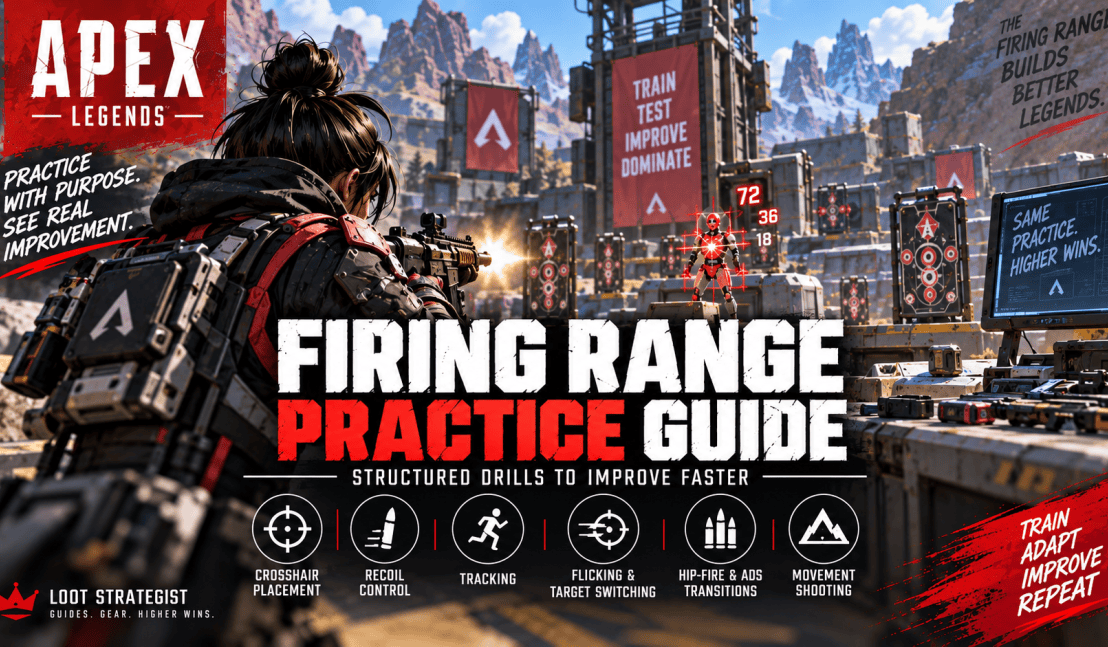
Spend a Little Time in the Firing Range

You don’t need to turn practice into a second job.

Spend a few minutes learning how your preferred weapons feel, especially their recoil and effective range. Practice changing weapons, reloading, aiming, sliding, and moving between pieces of cover.

The goal isn’t to become a mechanical monster.

It is simply to make basic actions feel automatic so that you have more attention available for the actual fight.

Try Bot Royale

Bot Royale can be useful when the normal player population feels overwhelming. It gives new players a less punishing environment in which to practice looting, rotating, fighting, and using abilities. EA includes Bot Royale among the game’s more relaxed Freestyle options.

Use it to learn the rhythm of a match, not as a substitute for eventually playing against real opponents.


Pick a Legend You Can Understand

Apex has a large roster of Legends, and learning all of them at once is unnecessary.

EA’s current beginner documentation says new players start with Bangalore, Lifeline, and Wraith, while additional Legends can be unlocked through the Welcome Pass.

For your first matches, choose one Legend and stick with them long enough to understand the kit.

You want to know:

  • What your Tactical ability does
  • What your Ultimate is useful for
  • When your abilities are better saved
  • How your abilities help your squad
  • How your Legend escapes a bad fight

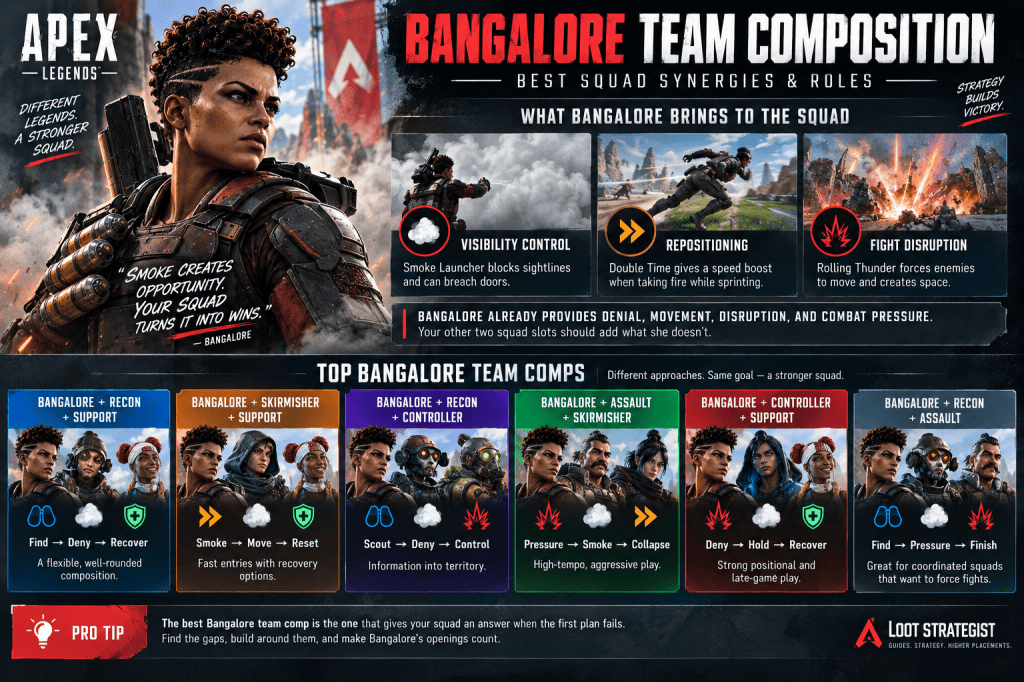
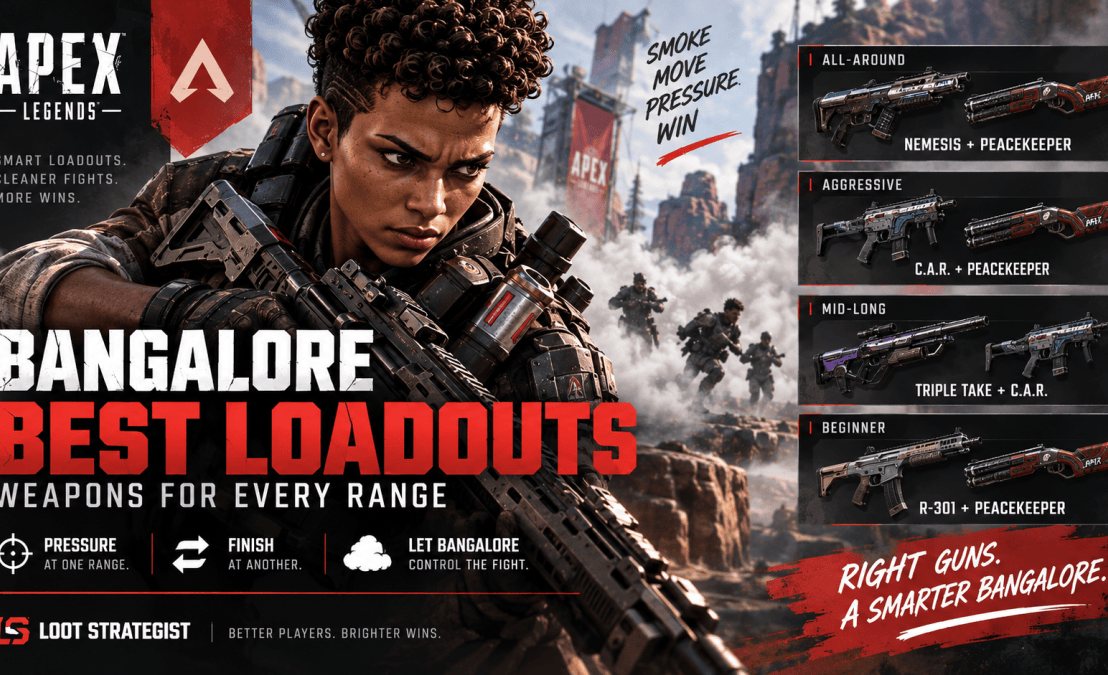
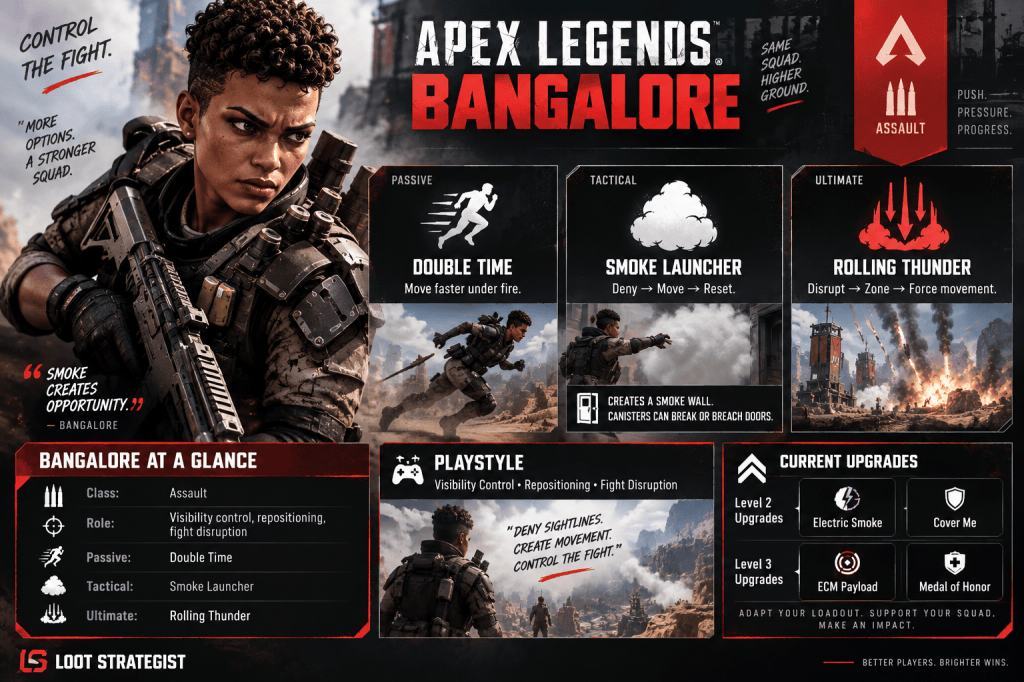
Bangalore

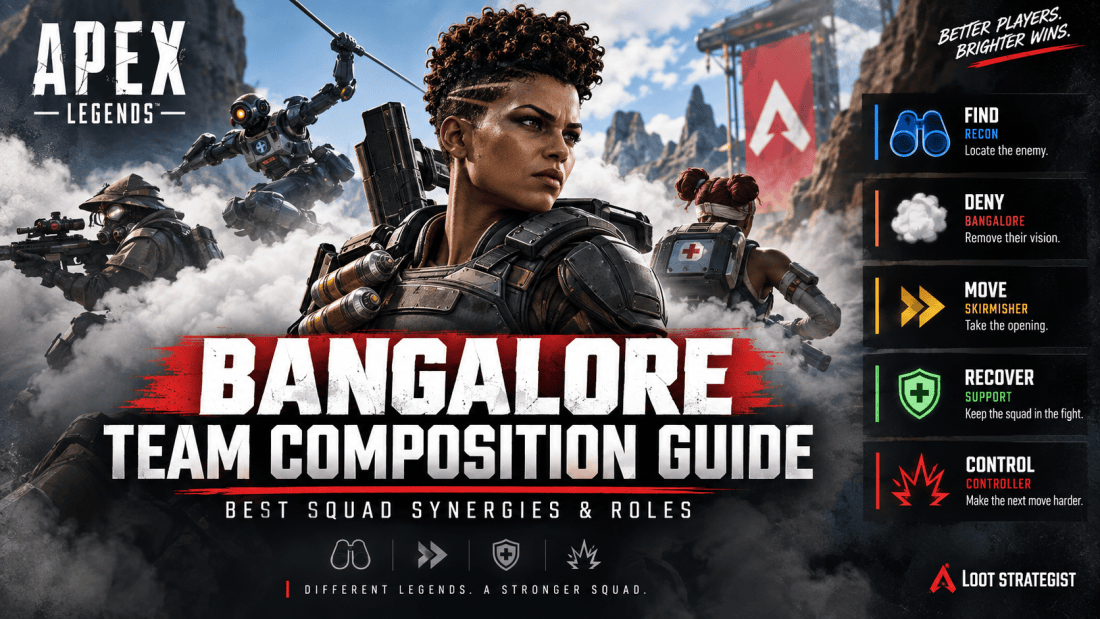
Bangalore is a strong learning choice because her abilities can help you break enemy sightlines and create opportunities to reposition.

She teaches an important Apex lesson early: sometimes the best play is to make the enemy’s information worse rather than trying to outshoot them.

Lifeline

Lifeline is a natural option for players who enjoy supporting their squad.

She also reinforces one of the game’s most important habits: staying alive and keeping teammates in the fight can matter more than chasing another elimination.

Wraith

Wraith can appeal to players who like a more aggressive or mobile playstyle.

Her kit can help you learn when to disengage, reposition, and create safer routes for your squad.

The important thing is less about finding the mythical “best” beginner Legend and more about learning one kit properly.


Survive the Drop First

Apex Legends landing guide showing squad members landing near each other, nearby enemy squads, and a suggested safe landing pattern

The match begins before you ever fire a weapon.

EA’s current beginner guidance recommends landing close to your teammates without dropping directly into the exact same loot spots, watching nearby enemy squads, and learning the maps over time.

For a new player, that translates into a simple rule:

Stay close enough to help your teammates, but give everyone room to loot.

If three squad members land on the same building and find one weapon between them, your squad has created its own problem.

Instead, spread across nearby rooms or buildings.

As you are dropping, look around.

Are enemy players landing nearby?

Do you have enough time to reach a quieter building?

Can your squad share the same general area without fighting over the same loot?

These decisions matter because the first 30 seconds often determine how prepared your squad will be for the first real fight.


Loot Quickly, Then Move

Your first objective is not a perfect loadout.

It is a functional loadout.

Try to secure:

  • Two usable weapons
  • Matching ammunition
  • Shield-healing items
  • Health-healing items
  • A knockdown shield
  • Useful attachments
  • A grenade or two when space allows

EA’s current beginner guidance similarly recommends weapons and matching ammo, healing items, and useful equipment while encouraging players to keep updating their inventory as they find better loot.

Once you’re equipped well enough to fight, stop searching every corner for an upgrade.

Apex rewards movement.

If you spend too long looting the first area, another squad may already have taken the strong position you needed.


Choose Weapons by Role

Apex Legends beginner weapon loadout showing an assault rifle and SMG for close- and mid-range combat

Don’t worry about memorizing the entire weapon pool.

For a beginner, a simple combination is easier to manage:

One weapon for medium range + one weapon for close range.

That could mean an assault rifle paired with an SMG, for example.

EA’s current weapons guidance recommends that newer players become comfortable with assault rifles and SMGs, highlighting weapons such as the R-301 and Volt as approachable options.

Assault Rifles

Assault rifles are flexible and useful in a wide range of engagements.

That versatility makes them excellent learning weapons.

SMGs

SMGs shine at closer ranges, especially when a fight becomes aggressive.

They pair naturally with a more versatile primary weapon.

Shotguns

Shotguns can end close-range fights very quickly, but they are less forgiving when your positioning or aim is off.

Learn them once you’re comfortable taking close fights.

Snipers and Long-Range Weapons

Long-range weapons have their place, but they shouldn’t become an excuse to avoid learning close and medium-range combat.

A beginner who spends an entire match sitting on a hill and firing occasionally is not necessarily learning the skills that make Apex players dangerous.

You eventually want to become comfortable fighting at different distances.


Learn Ammo Management

Your inventory has limited space.

That means every stack of ammunition should have a reason to be there.

Carry ammo that supports the weapons you’re actually using. If you switch weapons, update your inventory too.

EA’s current beginner guidance also recommends picking up ammunition that matches your weapons and changing your inventory as your loadout changes.

A surprisingly common beginner mistake is spending half the match carrying ammunition for a weapon they abandoned ten minutes ago.

Your backpack has better things to do.


Understand Shields, Health, and EVO

This is one of the first Apex systems worth learning properly.

Your shield absorbs damage before your health, so a player with low shields is not truly ready for another engagement simply because their health bar is full.

After a fight, check both.

Shield Cells and Shield Batteries restore shields, while Syringes and Med Kits restore health.

A good beginner habit is to reset after every engagement:

Heal → reload → check ammunition → check surroundings → move.

Apex also uses EVO progression, so your equipment and combat progression can develop as a match continues.

You don’t need to understand every detail immediately.

For your first few matches, simply recognize that surviving fights and managing your resources are part of getting stronger during the match.


Movement Matters, but Don’t Chase Fancy Tricks

Apex Legends movement guide showing how to move from open ground to cover, slide, and reposition safely

Apex is famous for movement.

You will eventually see players using advanced techniques that make them look as though they have forgotten gravity exists.

Ignore that for now.

Learn the basics.

Sprint

Move decisively when you’re rotating through areas that aren’t currently under attack.

Slide

Sliding helps maintain momentum and makes your movement less predictable.

Practice sliding naturally rather than forcing it into every situation.

Holster When It Helps

Putting your weapon away can improve movement speed, but you should not remain unarmed when you are approaching an area where enemies could appear.

Speed is useful.

Being ready to shoot is also useful.

Use Cover

This is the movement habit that matters most.

Move from cover to cover.

Avoid unnecessary open ground.

Don’t confuse constant motion with good movement.

A player who smoothly moves between cover is often much harder to kill than someone who simply jumps and slides everywhere.


Positioning Wins Fights Before the Shooting Starts

Apex Legends positioning guide comparing a bad exposed position with a good position behind cover and multiple escape routes

Apex is not purely an aim game.

Imagine two players with identical weapons.

One is standing in an open field.

The other is behind a rock with a clear line of retreat.

The second player already has an advantage.

Good positioning provides:

Cover.

Useful sightlines.

Escape routes.

Better angles.

More time to react.

Before starting a fight, ask yourself:

Where do I go if this goes badly?

If there is no answer, rethink the position.

That single habit will save you from a remarkable number of unnecessary deaths.


Don’t Fight in the Open

This sounds obvious until a fight starts.

Then people forget.

Heal behind cover.

Reload behind cover.

Revive behind cover.

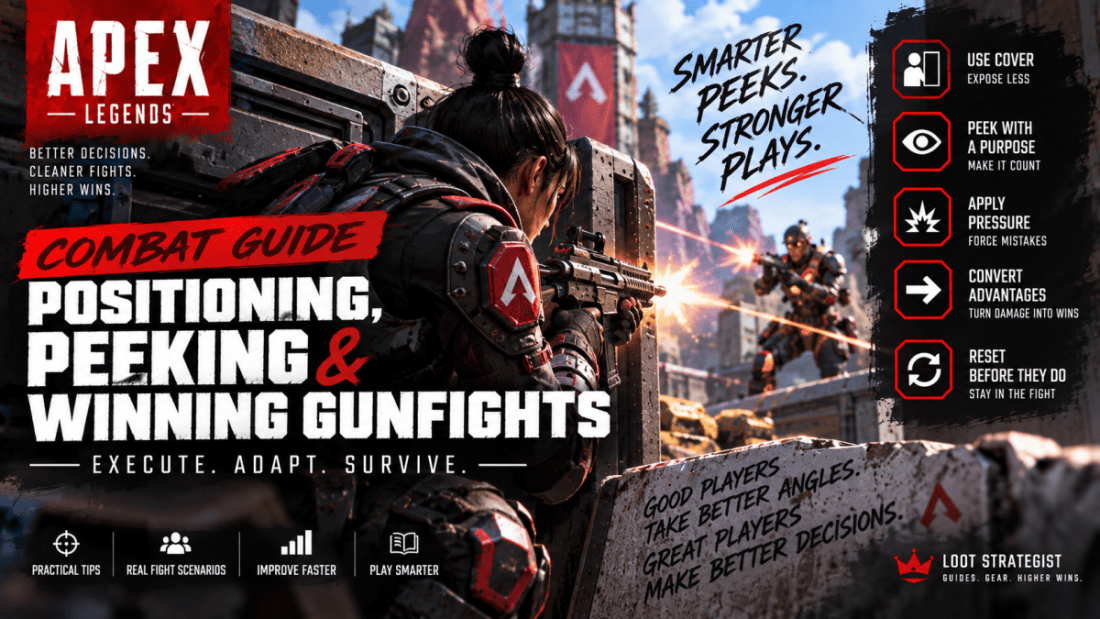
Peek from cover.

Use buildings, rocks, walls, terrain, and other obstacles to reduce the number of angles an enemy can use against you.

You don’t have to stand still and trade damage until somebody loses.

Take a shot, reposition, and make the enemy work for theirs.


Stay Close to Your Squad

Apex is built around squad play.

You don’t need to walk shoulder-to-shoulder with your teammates, but you should usually remain close enough that they can help you when a fight begins.

EA specifically advises beginners to stay close to their squad because isolated players are easier to overwhelm.

Good squad spacing means:

  • You can reinforce a teammate quickly
  • You can trade damage
  • You can combine abilities
  • You can retreat together
  • You can recover a knocked teammate more safely

The worst place for a new player is often 100 meters away from everyone else when the shooting starts.


Learn the Ping System

Apex’s ping system is one of its best tools for communication.

You don’t need a microphone to give your teammates useful information.

EA specifically recommends pinging enemy positions, loot, and locations.

Use pings to:

Mark enemies.

Highlight useful loot.

Suggest where to move.

Warn teammates about nearby danger.

Show where you intend to go.

A good ping can communicate something immediately that would otherwise take several seconds to explain.

Just remember that communication is information, not noise. One useful ping is better than twelve frantic ones.


Know When to Fight

This is probably the hardest beginner lesson.

Seeing an enemy does not mean you have to shoot them.

Before committing to a fight, look at the situation.

Do you have decent equipment?

Are your teammates nearby?

Do you have cover?

Is the enemy in a better position?

Can you disengage?

Is the Ring about to force everyone into a different area?

There is no shame in refusing a bad fight.

Apex rewards players who can recognize a favorable engagement before they commit to it.

That doesn’t mean you should spend the entire match hiding, either.

Fight when you have a reason.

Leave when you don’t.


Beware the Third Party

You win a fight.

Great.

Now you start looting.

Footsteps.

Another squad.

Death.

This is the classic Apex third-party problem.

After an engagement, your squad may be low on shields, healing, ammunition, and positional advantage. Another team arriving at that exact moment can clean up before you’ve recovered.

So make “reset” a habit.

Heal.

Reload.

Check your surroundings.

Listen for nearby footsteps and gunfire.

Then loot.

The extra few seconds can be the difference between collecting useful gear and becoming somebody else’s useful gear.


Use Grenades With a Purpose

Grenades are most useful when they solve a problem.

Use them to:

  • Force enemies out of cover
  • Punish a team holding a building
  • Deny a route
  • Create space during a retreat
  • Pressure an enemy while your squad pushes

Don’t carry a backpack full of grenades simply because they were available.

Your inventory should support the way you actually play.


Watch the Ring

The Ring is one of the systems that gives Apex its pace.

As the match continues, playable space becomes more restricted, forcing squads closer together.

The beginner mistake is waiting until the last possible moment to rotate.

That often creates a terrible choice:

Run through an open area while the Ring closes behind you, or enter an unfamiliar area where another squad is already waiting.

A better approach is to think ahead.

Ask:

Where does my squad want to be next?

Then move before you absolutely have to.

Being early gives you options.

Being late gives you problems.


Don’t Throw Yourself Into a Revive

Your teammate is down.

Your instinct may be to sprint straight at them.

Sometimes that’s correct.

Sometimes it is the fastest possible way to get two teammates knocked instead of one.

Before reviving, look at:

  • Enemy positions
  • Available cover
  • Your own health and shields
  • Your other teammate’s location
  • Whether the enemy squad is still watching the area

A revive is valuable.

A revive attempt with no cover and three enemies staring directly at you is usually not.

Knocked teammates can also use their knockdown shields, and surviving teammates may have opportunities to recover them or respawn them later, depending on the situation.

Don’t turn one bad position into a complete squad wipe because you felt obligated to revive immediately.


What to Do After You Get Knocked

Getting knocked is not automatically the end of the match.

Stay calm.

Use your knockdown shield when appropriate.

Move toward cover if you can.

Keep giving useful information to your teammates.

Tell them where enemies are rather than simply announcing that everything has gone terribly.

Sometimes your team can recover you.

Sometimes they can’t.

Either way, useful information can still help win the fight.


Don’t Rush Into Ranked

Ranked is designed for competitive play, so there’s no reason to force yourself into it before you’re comfortable with the basics.

EA currently requires new players below Level 20 to complete the Road to Ranked challenges before they can enter Ranked.

Treat those requirements as part of your learning period.

By the time Ranked becomes available, ideally you should already be comfortable with:

  • Your preferred Legend
  • Several weapons
  • Basic movement
  • Healing
  • Ping communication
  • Rotating with the Ring
  • Fighting around cover
  • Staying with your squad

Ranked points are not going to teach those fundamentals for you.

Practice will.


The Biggest Apex Legends Beginner Mistakes

Landing Too Far From Your Squad

You want enough space to loot without separating so far that your teammates can’t help.

Looting for Too Long

Once you can fight, move.

Carrying the Wrong Ammo

Your inventory should support your current weapons, not the guns you used ten minutes ago.

Ignoring Shields

Full health doesn’t mean you’re ready if your shields are empty.

Fighting Alone

Being aggressive is not the same as being isolated.

Chasing Every Knock

An enemy running around a corner may be leading you directly into another squad.

Ignoring the Ring

Late rotations create unnecessary problems.

Using Abilities Without a Plan

An ability being available doesn’t mean it has to be used immediately.

Reviving in the Open

Check the situation first.

Blaming Teammates for Every Death

Sometimes your teammate made a bad play.

Sometimes you did.

The useful question is what you can do differently next time.


A Simple Game Plan for Your First Matches

You don’t need to remember fifty rules while learning.

Use this instead.

Early Game

Land near your squad.

Find two workable weapons.

Collect matching ammunition.

Pick up shields and healing.

Pay attention to nearby enemies.

Then move.

Mid Game

Watch the Ring.

Stay with your squad.

Look for strong positions.

Take sensible fights.

Reset after engagements.

Be ready for third parties.

Late Game

Value positioning more than unnecessary kills.

Hold useful ground.

Stay together.

Keep healing resources available.

Think about where the next fight will happen before it starts.

That is the difference between reacting to the game and actually playing it.


How to Improve at Apex Legends Faster

Playing more matches helps, but simply repeating the same mistake doesn’t make you better at it.

Instead, review your deaths.

Not every death needs a complicated explanation.

Sometimes you simply lost a fair gunfight.

Other times there was a clear mistake:

You were standing in the open.

You pushed before your teammates arrived.

You ignored the Ring.

You had no shields.

You chased a player into a bad position.

You had no escape route.

Pick the biggest mistake and work on that one.

The next time the same situation appears, try a different decision.

That’s meaningful improvement.

Practice One Skill at a Time

Don’t try to master everything simultaneously.

Spend one session paying attention to positioning.

Another can focus on movement.

Another can focus on one or two weapons.

You will improve faster when you actually know what you’re practicing.


Loot Strategist’s Beginner Rule

For your first several matches, forget about chasing huge kill totals.

Build the habits that keep you alive:

Land with your squad.

Get a practical loadout quickly.

Keep your shields and health topped up.

Use cover.

Watch the Ring.

Don’t take fights you cannot explain.

Learn from your deaths.

Kills will come later.

First, become difficult to kill.


Apex Legends Beginner Checklist

Apex Legends post-fight reset guide showing the steps to heal, reload, check surroundings, and loot after winning a fight

Before and during every match, remember:

Choose a Legend you understand.

Stay close to your squad.

Loot quickly.

Carry weapons that cover different ranges.

Keep appropriate ammunition.

Carry shields and health heals.

Use cover whenever possible.

Ping useful information.

Watch the Ring.

Reset after fights.

Expect third parties.

Know when to disengage.

That is enough to get started.

You can worry about advanced movement techniques and hyper-optimized loadouts later.


Final Thoughts

Apex Legends has a steep learning curve because there is a lot happening at once.

The game asks you to shoot accurately, move intelligently, manage resources, understand your Legend, communicate with teammates, read the map, and make quick decisions under pressure.

You don’t have to master all of that immediately.

Start small.

Learn one Legend. Get comfortable with a few weapons. Practice basic movement. Stay near your squad. Use cover. Watch the Ring. Heal before taking another fight.

Most importantly, stop treating every enemy as an invitation to fight.

Good Apex players aren’t simply the ones who can win a gunfight.

They’re the ones who recognize which fights are worth taking in the first place.

And yes, you’ll still occasionally get deleted by somebody who appears to have a personal grudge against your existence.

That’s Apex.


Related Apex Legends Guides

Apex Legends Octane Guide — Learn how Octane’s mobility tools work and how to use his speed without throwing away your team’s position.

Apex Legends Squad Composition Guide — Explore how different Legends can complement each other when building a squad.

More Apex Legends Guides — Find additional Legend guides, tips, and strategies from Loot Strategist.


Sources & Updates

Last reviewed: September 6, 2026

Apex Legends changes regularly, so this guide focuses on fundamentals that remain useful across seasons rather than short-lived weapon or Legend rankings.

Current game information was checked against EA/Respawn’s official Apex Legends documentation, including beginner guidance, game modes, the current Ranked system, and the Marked Season 30 update. Marked launched on August 4, 2026.

Our gameplay recommendations are editorial guidance from Loot Strategist rather than claims that there is one objectively correct way to play Apex Legends.

How we verify: Changing factual details—such as game modes, Ranked access, seasonal systems, and beginner onboarding—are checked against official EA sources. Practical advice is presented as strategy and editorial recommendation rather than as an official game rule.

Apex Legends Weapons Guide: Best Guns, Weapon Types & Beginner Tips

Apex Legends Weapons Guide: Best Guns, Weapon Types & Beginner Tips

Choosing a weapon in Apex Legends is about more than picking up the gun with the highest damage.

You need to think about range, recoil, magazine size, ammo availability, attachments, your second weapon, and even the Legend you’re playing. A weapon that feels incredible in a close-range fight can become awkward when you’re trying to pressure another squad from a distance.

That is why there isn’t one weapon that is simply the best gun in Apex Legends for everyone.

EA’s own weapons guide recommends trying different guns and learning which weapons feel comfortable at different ranges. For newer players, Assault Rifles and SMGs are a particularly useful starting point because they cover a wide variety of encounters.

This Apex Legends weapons guide breaks down the major weapon types, explains how to choose a loadout, and covers practical tips for getting more value from the guns you find during a match.

Apex Legends Weapon Types Explained

Apex Legends divides its guns into several weapon categories, each designed around different combat situations.

Understanding those roles is more useful than memorizing a tier list because weapon balance changes regularly.

Apex Legends weapon types infographic showing seven categories—Assault Rifles, SMGs, LMGs, Shotguns, Marksman, Snipers, and Pistols—represented by recognizable weapon silhouettes.

Assault Rifles

Assault Rifles are some of the most versatile weapons in Apex Legends.

They’re generally useful at close-to-mid range and can be effective for players who are still learning how to manage different engagements.

Examples include:

  • HAVOC Rifle
  • VK-47 Flatline
  • Hemlok Burst AR
  • R-301 Carbine
  • Nemesis Burst AR

The biggest advantage of an Assault Rifle is flexibility.

You can use one to pressure an enemy across a street, fight around a building, or support a teammate during a medium-range engagement.

For beginners, the R-301 Carbine is an especially approachable starting point because of its relatively manageable handling. EA also specifically recommends it as a beginner-friendly weapon.

Submachine Guns

SMGs are built around faster, closer-range engagements.

They’re particularly useful when fights move inside buildings or when you need to follow up quickly after closing the distance.

SMGs reward:

  • Good tracking.
  • Confident movement.
  • Close-range positioning.
  • Knowing when to reload.
  • Staying close enough for your weapon’s strengths to matter.

A common mistake is carrying an SMG and then taking every fight from too far away.

If your weapon is strongest at close range, your positioning should help you get there safely.

Light Machine Guns

LMGs generally offer larger magazines and sustained fire.

That can make them useful when suppressing an enemy position or maintaining pressure while your teammates reposition.

The trade-off is that they can feel less agile than some lighter weapons.

They’re particularly useful when you want to keep firing rather than constantly resetting your weapon.

Shotguns

Shotguns specialize in close-range burst damage.

They can be extremely effective when you’re fighting around doors, corners, buildings, and other tight spaces.

The catch is obvious: you need to be close enough for the weapon to do its job.

Shotguns also punish missed shots more severely than many automatic weapons. If you fire and miss during a close-range fight, the opponent may have enough time to punish you before you can fire again.

That makes shotguns excellent weapons for players who are comfortable with movement and positioning.

Marksman Weapons

Marksman weapons occupy an interesting middle ground.

They’re generally suited to players who want more range than an SMG or Assault Rifle can comfortably provide without committing fully to a traditional sniper.

They can be useful for:

  • Mid-to-long-range pressure.
  • Opening damage before a rotation.
  • Holding an angle.
  • Punishing enemies who stay exposed.

However, weapon balance between Marksman weapons and other categories changes over time.

Respawn has specifically discussed moving away from a Marksman-dominated meta during 2026, so it’s better to think of this category in terms of its role rather than assuming Marksman weapons will always dominate long-range encounters.

Sniper Rifles

Sniper Rifles are designed for long-range engagements.

They allow you to pressure enemies who are too far away for most close-range weapons to use effectively.

The downside is that they can be awkward when another squad suddenly pushes into close range.

If you choose a sniper, your second weapon becomes especially important.

You don’t want to discover halfway through a fight that both weapons are designed for long-range engagements.


What Is the Best Gun in Apex Legends?

There isn’t a universal answer.

The strongest weapon for you depends on how you play and what the match gives you.

A weapon that has excellent statistics on paper isn’t automatically the best choice if you can’t control its recoil or consistently land shots with it.

Instead, ask three questions:

What range am I fighting at?

If most of your fights happen inside buildings, a shotgun or SMG may make more sense than a sniper.

Can I control the weapon?

A weapon with theoretically excellent damage won’t help much if your shots consistently miss.

Does it complement my second weapon?

Your two weapons should ideally cover different situations.

That third question is particularly important for beginners.


Best Weapons for Beginners

If you’re still learning Apex Legends, don’t worry about mastering every gun immediately.

Start with weapons that help you understand the fundamentals.

R-301 Carbine

The R-301 is a strong beginner choice because it is versatile and relatively easy to understand.

It can handle a range of encounters and gives new players an opportunity to practice tracking, recoil control, and positioning without requiring an extremely specialized playstyle.

If you find one early in a match and feel comfortable with it, there is little reason to abandon it simply because another weapon has a higher reputation.

Flatline

The VK-47 Flatline offers a different feel from the R-301.

It rewards players who are comfortable with its recoil and damage profile.

If you’re transitioning from easier-to-control weapons, spend some time in the Firing Range before deciding whether you like it.

Alternator

The Alternator can be approachable for players who prefer a straightforward automatic weapon.

It can work well in close-to-mid-range encounters and is useful while you’re learning how to track moving targets.

Volt

The Volt is another useful option for players who enjoy close-range automatic fire.

Its current energy-weapon ammunition system is different from the traditional ammo system many longtime players remember, so newer guides that describe it as simply consuming conventional Energy Ammo are outdated.

Peacekeeper

The Peacekeeper is a good weapon to practice if you want to improve your close-range accuracy.

It can be rewarding when your timing and aim are good, but it is less forgiving when you repeatedly miss.


The Best Weapon Depends on Your Range

Apex Legends combat range infographic showing recommended weapons by distance: Shotguns and SMGs for close range, Assault Rifles and Marksman weapons for mid range, and Marksman and Sniper weapons for long range.

One of the easiest ways to improve your weapon choices is to think about engagement range.

Close Range

Good options include:

  • SMGs
  • Shotguns
  • Certain Pistols

Close-range weapons work best when you’re fighting around buildings, corners, doors, and tight cover.

Movement also becomes extremely important here.

Your recent movement practice should complement your weapon choice. If you’re carrying an SMG or shotgun, being able to strafe, slide, change direction, and use cover can make a huge difference.

Mid Range

This is where Assault Rifles and many Marksman weapons become useful.

Mid-range fights give you enough distance to avoid some of the chaos of a point-blank fight while still allowing consistent pressure.

For beginners, this is often the easiest range to learn because you have more time to react than you would in a shotgun duel.

Long Range

Snipers and certain Marksman weapons are designed for this role.

Long-range fights can be useful for:

  • Gathering information.
  • Cracking shields.
  • Forcing enemies out of cover.
  • Creating opportunities for your squad to rotate.
  • Punishing teams that remain exposed.

But don’t fall into the trap of shooting from far away simply because you can.

If you’re dealing 20 or 30 damage repeatedly without creating an opportunity for your team, you may be better off rotating into a stronger position.


How to Build a Good Two-Gun Loadout

Apex Legends two-gun loadout infographic showing a mid-range primary weapon paired with a close-range secondary, with example Assault Rifle + SMG and alternative Marksman + SMG combinations.

Your two weapons should generally complement each other.

A simple beginner setup is:

Mid-range weapon + close-range weapon

For example:

Assault Rifle + SMG

This gives you a weapon for sustained mid-range fights and another for aggressive close-range engagements.

Another option is:

Marksman + SMG

This gives you more range while keeping a strong close-range option.

You could also use:

Sniper + Shotgun

This setup gives you a very strong range split, but it requires more confidence because both weapons are specialized.

The important thing is to avoid creating unnecessary overlap.

If both weapons are strongest at exactly the same range, you may find yourself poorly equipped when the fight changes distance.


Don’t Choose a Weapon Before Considering Your Second Gun

This is an easy mistake to make when looting.

You find a weapon you like, grab it immediately, and then spend the next several minutes looking for another gun that uses the same type of ammo or fills the same role.

Instead, think in pairs.

For example:

“I have a strong mid-range weapon. Now I need something for close range.”

That simple thought process makes looting more efficient.

It also helps prevent awkward loadouts.


Ammo Management in Apex Legends

Ammo management is part of weapon selection.

EA currently lists several ammunition systems, including Light, Heavy, Energy, Shotgun Shells, Sniper Ammo, Mythic Ammo, and Arrows. Some special ammunition systems behave differently from traditional floor-loot ammo.

One particularly important current change is the Energy weapon rework introduced with the Marked update.

Energy Ammo was removed as a conventional lootable item. Energy weapons instead have their own ammunition stockpile, which regenerates over time. Different weapons have different stockpile sizes, and the regeneration pauses while firing or reloading.

That means old guides explaining energy weapons as if they work exactly like Light or Heavy Ammo are no longer accurate.

For newer players, the bigger lesson is simple:

Don’t fill your inventory with ammo just because you have space.

Carry what your weapons actually need, pay attention to how much ammunition you are using, and make sure you have enough supplies for the fights you’re likely to take.


Weapon Attachments Matter

Finding the right attachment can change how comfortable a weapon feels.

Depending on the weapon, attachments can improve areas such as:

  • Magazine capacity.
  • Reloading.
  • Handling.
  • Recoil control.
  • Optics.
  • Hip-fire performance.
  • Other weapon-specific characteristics.

But don’t spend half a match searching for a perfect attachment.

A weapon you can use confidently with a basic setup is usually more valuable than a weapon sitting in your inventory while you search for one missing attachment.

Prioritize Attachments That Solve a Problem

Instead of thinking:

“I need the best attachment.”

Think:

“What is currently making this weapon difficult to use?”

If you’re constantly running out of bullets during a fight, a better magazine can matter.

If you struggle to control recoil, an attachment that improves handling or recoil can be more valuable.

If you’re fighting primarily at longer distances, the right optic can make target acquisition easier.

This is a much more useful way to think about attachments.


Don’t Chase Every Hop-Up

Hop-Ups can modify or enhance certain weapons, but their availability and implementation can change between seasons.

A common beginner mistake is seeing a Hop-Up and immediately deciding that they need the corresponding weapon.

Instead, start with the weapon.

If you already like the gun and find the relevant attachment, great.

Don’t build your entire loadout around finding one particular Hop-Up unless you already understand why you want it.

Apex has also moved toward locked Hop-Up systems in previous updates, so older loot guides can describe systems that no longer work the same way.


Weapon Choice Should Match Your Playstyle

Your Legend and weapons don’t have to match perfectly, but they can complement each other.

Aggressive Players

If you enjoy pushing enemies and taking close-range fights, consider weapons that reward:

  • Fast tracking.
  • Quick movement.
  • Close-range accuracy.
  • Rapid follow-up damage.

SMGs and shotguns are natural options to experiment with.

Defensive Players

If you prefer holding buildings, controlling angles, and forcing enemies to approach you, weapons that provide sustained pressure or reliable mid-range damage can be more comfortable.

Long-Range Players

If you prefer watching an enemy squad from a distance and looking for opportunities to punish exposure, Marksman weapons and Sniper Rifles may suit you better.

Just remember that eventually the fight may come to you.

Having a second weapon capable of handling close-range pressure is important.


Match Your Weapon to Your Legend

Some Legend abilities can make certain weapon styles more comfortable.

For example, a mobility-focused Legend can make it easier to close distance with an SMG or shotgun.

That doesn’t mean you need to force a particular weapon onto a particular Legend.

Instead, think about what your Legend allows you to do.

If your Legend can quickly reposition, you may be able to take angles that make a close-range weapon more effective.

If your Legend specializes in holding an area, you may get more value from weapons that let you control an approach.

This is where weapon choice becomes part of your overall game plan rather than an isolated decision.


The Biggest Weapon Mistakes Beginners Make

1. Chasing the “Meta” Gun

A weapon can be strong without being the right weapon for you.

If you can’t control it, your personal results may be worse than with a supposedly weaker weapon that you understand.

2. Carrying Two Weapons for the Same Range

Running two close-range weapons can leave you struggling to pressure enemies across open terrain.

Likewise, carrying two long-range weapons can become painful when another squad pushes your building.

Think about coverage.

3. Ignoring Recoil

Damage numbers don’t matter if your shots aren’t connecting.

Spend time in the Firing Range learning how your weapon behaves.

4. Reloading in the Open

A magazine running dry doesn’t mean you should stand still and reload.

Use cover, reposition, or break line of sight when possible.

This connects directly to the movement fundamentals covered in an Apex Legends movement guide.

5. Staying in a Bad Fight Because You Have the “Right” Weapon

A good gun doesn’t fix bad positioning.

If you’re exposed, outnumbered, or being pushed from multiple angles, repositioning may be more important than continuing to fire.

6. Spending Too Long Looting

The perfect loadout doesn’t matter if another squad reaches the next position before you do.

Get weapons that work, grab useful attachments, secure enough ammunition, and keep moving.


How to Practice Your Weapons

Apex Legends weapon practice infographic showing five steps: recoil control, tracking moving targets, strafing while shooting, quick weapon swaps, and using cover effectively.

The Firing Range is one of the best places to become comfortable with a weapon before relying on it in a real match.

Don’t just shoot at a stationary target.

Practice situations that resemble actual fights.

Drill 1: Recoil Control

Choose one automatic weapon.

Fire at a target while controlling the recoil.

Start at a comfortable range, then move farther away.

Drill 2: Tracking

Move around while keeping your crosshair on a target.

This is particularly useful for SMGs and other weapons that require sustained tracking.

Drill 3: Strafe + Shoot

Combine your weapon practice with movement.

Strafe left and right while firing and maintain your crosshair placement.

This connects your aim training with the movement skills you’ve already been practicing.

Drill 4: Weapon Swap

Practice switching between your two weapons.

You don’t want to spend several seconds fumbling through your inventory during a fight.

Learn which weapon you reach for at each range.

Drill 5: Cover

Practice firing from behind cover, retreating, reloading, and re-peeking from a slightly different angle.

This teaches an important lesson:

Good shooting is not just about aim. It’s also about giving yourself safe opportunities to shoot.


How to Choose a Weapon After Landing

The first weapon you find doesn’t need to be your final weapon.

Early in a match, prioritize functionality.

If you find an SMG and a shotgun, you can fight.

If you find an Assault Rifle and a pistol, you can fight.

You don’t need to spend the next five minutes searching for your dream loadout.

As you rotate, you can gradually improve your weapons and attachments.

This is especially important during contested drops when another squad is already nearby.

A usable weapon now is more valuable than a theoretically better weapon that you might find later.


What If You Find a Weapon You Don’t Like?

Use it long enough to understand why you dislike it.

Is the recoil difficult?

Is the fire rate uncomfortable?

Are you fighting at the wrong range?

Does the weapon require more precise aim than you’re currently comfortable with?

Sometimes the problem isn’t the weapon.

Sometimes you’re asking it to do something it wasn’t designed to do.

If you consistently dislike a weapon after giving it a fair test, move on.

Apex gives you enough weapon variety that you can build a loadout around your strengths.


How to Improve Your Weapon Choice Over Time

Apex Legends weapon decision-making flowchart showing how to choose weapons based on combat range, select a complementary second weapon, and use a loadout that the player can control confidently.

You don’t need to memorize every weapon statistic.

Instead, start paying attention to what happens in your matches.

After a fight, ask:

Did I lose because my weapon was weak, or because I used it badly?

Was I fighting at the wrong range?

Did my second weapon give me another option?

Did I run out of ammunition?

Did I miss because I couldn’t control the recoil?

These questions are much more useful than simply checking which weapon currently has the highest pick rate.

Apex is constantly changing.

Respawn’s 2026 updates have already adjusted weapon damage, recoil, magazine sizes, ammo systems, weapon rotations, and other mechanics.

Learning how to evaluate a weapon will therefore remain useful even when the meta changes.


A Simple Beginner Weapon Checklist

Before committing to a loadout, ask yourself:

  • Do I have a weapon for my preferred fighting range?
  • Does my second weapon cover a different range?
  • Can I control both weapons?
  • Do I have enough ammunition?
  • Do I have useful attachments without spending too much time looting?
  • Can I fight effectively indoors?
  • Can I pressure enemies at medium range?
  • Do my weapons work with the way I like to play?

If the answer is mostly yes, your loadout is probably good enough.

You don’t need a perfect setup.

You need a setup you understand.


Final Thoughts

The best weapons in Apex Legends aren’t necessarily the ones at the top of a tier list.

The best weapon for you is the one you can control, understand, and use at the range where your fights actually happen.

For beginners, start with versatile weapons such as Assault Rifles and SMGs. Learn how each weapon behaves, practice recoil and tracking in the Firing Range, and build two-gun loadouts that cover different situations.

From there, experiment.

Try shotguns if you want to improve your close-range fighting. Try Marksman weapons if you enjoy controlling longer angles. Test Snipers if you prefer patient, long-range engagements.

Most importantly, don’t let the current meta dictate everything you pick up.

Weapon balance will continue to change. Ammo systems can change. Attachments can change. Care Package rotations can change.

The skill that lasts is knowing why you’re choosing a weapon and what you want it to accomplish.

Once you start thinking that way, looting becomes faster, your loadouts become more deliberate, and your weapon choices start supporting the rest of your game instead of determining it.

Related Apex Legends articles

Apex Legends Movement guide

Apex Legends Octane Guide

Apex Legends Weapons Guide

Apex Legends Beginner Guide

Apex Legends Movement Guide: Sliding, Strafing & Advanced Tips

Apex Legends Movement Guide: Sliding, Strafing & Advanced Tips

In Apex Legends, winning a gunfight isn’t always about who lands the first shot. Sometimes it’s about who reaches cover first, who takes the better angle, or who can make the other player miss while keeping their own crosshair on target.

That is why movement matters so much.

You don’t need to master every flashy movement technique to become a better Apex player. In fact, most players will see bigger improvements by learning a few fundamentals—sprinting efficiently, sliding at the right time, strafing while shooting, and using terrain intelligently—before worrying about advanced mechanics.

This Apex Legends movement guide covers those fundamentals first, then moves into more advanced techniques and practical drills you can use in the Firing Range.

Why Movement Matters in Apex Legends

Apex Legends is built around momentum, positioning, and fast engagements. Movement helps you do much more than travel around the map.

Good movement can help you:

  • Reach cover before an enemy finishes their reload.
  • Make yourself harder to track during a close-range fight.
  • Change angles without giving an opponent an easy target.
  • Escape a bad engagement.
  • Take high ground or stronger defensive positions.
  • Stay with your squad during rotations.
  • Create better opportunities for your own shots.

EA’s beginner guidance specifically recommends sprinting rather than walking, holstering your weapon while travelling, sliding down declines, and using movement options such as launch pads and ziplines to travel efficiently.

The important distinction is that fast movement isn’t automatically good movement.

If you sprint into an open area with no cover, slide past your teammates, or chase an enemy into a bad position, moving quickly won’t save you. The best movement supports your positioning rather than replacing it.


Apex Legends Movement Basics

Before learning advanced techniques, make sure the basic movement loop feels natural.

Apex Legends basic movement diagram showing sprint, slide, jump, strafe, and cover

Sprinting

Sprinting is your default way of moving around the map.

Use it when rotating between locations, repositioning during a fight, or closing distance when you aren’t actively aiming.

One simple habit is worth developing early: don’t walk when you could safely sprint.

There is little benefit to moving slowly through open areas when you’re not trying to maintain a specific firing position.

Holstering Your Weapon

Holstering your weapon lets you move faster while travelling.

It is particularly useful when:

  • Rotating toward the next Ring.
  • Catching up with your squad.
  • Crossing a relatively safe area.
  • Retreating from a fight.
  • Moving between buildings.

You don’t want to spend the entire match with your weapon holstered, though. If you expect an enemy around the next corner, having your weapon ready is more important than squeezing out a little extra movement speed.

That small decision—weapon out or weapon holstered—becomes increasingly important as you improve.

Sliding

Sliding is one of the most useful movement mechanics for beginners.

A basic slide lets you maintain momentum while lowering your character’s profile and moving quickly across suitable terrain.

The easiest way to understand sliding is to think about momentum, rather than treating it as a button you press constantly.

Use slides when terrain and positioning make them useful. Sliding down a slope, for example, can help you cover ground quickly. Sliding across flat terrain can also help you change your position during a fight, but doing it repeatedly without a purpose can make your movement predictable.

Slide Jumping

Slide jumping combines a slide with a jump to preserve momentum and cover ground efficiently.

A simple practice routine is:

  1. Sprint forward.
  2. Start a slide.
  3. Jump near the end of the slide.
  4. Continue sprinting once you land.
  5. Repeat the sequence.

Don’t worry about performing it perfectly at first. The goal is to make the transition feel automatic.

Once you stop thinking about every individual input, you can concentrate more on where you’re actually going.


Strafing: The Movement Skill You Should Learn First

Strafing is moving sideways while keeping your aim on an opponent.

It sounds simple, but effective strafing is one of the most important skills in Apex.

Apex Legends strafing example showing a character moving left and right while maintaining aim on a target

When you’re standing still and shooting, your opponent has a much easier target. When you’re moving unpredictably while maintaining your aim, they have to constantly adjust.

How to Practice Strafing

Start in the Firing Range.

Pick a target and move left and right while keeping your crosshair around the target’s upper body.

Don’t immediately try to move as quickly as possible.

Instead, focus on three things:

  • Keep your crosshair on the target.
  • Change direction without losing control.
  • Avoid falling into an obvious left-right rhythm.

Once you can track a stationary target comfortably, increase the difficulty by shooting while moving and then practicing against moving targets.

EA also recommends using the Firing Range to practice aim, tracking, recoil control, and other mechanical skills.

Don’t Strafe Like a Metronome

One common beginner habit is moving left, then right, then left, then right at exactly the same pace.

That looks like movement, but it isn’t particularly difficult to predict.

Instead, vary your timing.

Move one direction for a moment, change direction, briefly adjust your movement, and occasionally use the environment to break the opponent’s line of sight.

Your objective isn’t to look flashy.

Your objective is to make your opponent’s next shot harder.


Crouching and Changing Your Height

Crouching can be useful during fights, particularly when combined with strafing.

Changing your character’s height can disrupt an opponent’s tracking and create awkward situations in close-range fights.

However, constantly crouch-spamming isn’t a substitute for good positioning.

If you are fighting beside a piece of cover, for example, changing your height while moving around that cover can be much more useful than repeatedly crouching in the open.

Think about where your opponent expects you to be.

Good movement often comes from making small changes that force them to adjust their aim.


Use Cover as Part of Your Movement

One of the biggest mistakes newer players make is treating movement and positioning as separate skills.

They aren’t.

Apex Legends cover movement comparison showing a character running across open ground versus moving safely from cover to cover

Imagine you’re fighting an enemy outside a building.

You could strafe around in the open and hope your movement is enough to keep you alive.

Or you could move between the doorway, wall, box, rock, or other available cover while taking shots.

The second option gives your movement a purpose.

Try to build the habit of asking:

“Where am I moving next if I get shot?”

If you don’t have an answer, your current position may already be too exposed.


Movement During a Gunfight

Movement becomes much more valuable when combined with shooting.

Close-Range Fights

At close range, standing still is usually a bad idea.

Use strafing, crouching, short slides, and nearby cover to make yourself harder to track.

But don’t sacrifice your aim just to move constantly.

There is a point where excessive movement makes your own shots worse.

A useful rule is:

Move enough to make yourself difficult to hit, but not so much that you can’t control your weapon.

That balance is more valuable than performing complicated movement techniques.

Reloading

Reloading creates a vulnerable moment.

Rather than standing in the open while your weapon reloads, use the time to:

  • Move behind cover.
  • Change your angle.
  • Strafe toward safety.
  • Break the enemy’s line of sight.
  • Create enough distance to reset the fight.

The same principle applies when healing.

Don’t automatically heal in the exact location where you took damage. If the enemy knows where you are, reposition first whenever the situation allows it.

Moving While Healing

Healing is another opportunity to think about movement.

If you’re behind solid cover, stay protected.

If your cover is weak or the enemy has an angle on it, consider repositioning before committing to a longer heal.

The goal isn’t to constantly run around while healing. It’s to avoid giving an opponent an easy prediction.


Advanced Apex Legends Movement Techniques

Once the basics become comfortable, you can start experimenting with more advanced movement.

However, there is an important warning here: Apex movement mechanics have changed over the game’s lifespan.

Old movement tutorials can remain popular long after the underlying mechanics have been adjusted. Respawn has previously made changes to tap-strafing and specifically described its intention to alter rapid directional inputs associated with the technique.

For that reason, treat older movement tutorials with caution and verify advanced techniques against current patch notes or in-game behavior before building your playstyle around them.

Bunny Hopping

Bunny hopping refers to maintaining momentum through repeated jumps and movement inputs.

It has historically been used to make certain movement situations more fluid, particularly when repositioning or combining movement with healing.

The exact usefulness and execution of movement techniques can change as Apex evolves, so don’t make bunny hopping your first priority.

If your basic slide jumps and strafing aren’t consistent yet, you’ll get more value from practicing those skills.

Tap-Strafing

Tap-strafing is one of the most well-known advanced Apex movement techniques, particularly among mouse-and-keyboard players.

The term has also been used to describe slightly different movement behaviors, which is one reason older guides can become confusing.

Respawn has previously discussed changes targeting rapid directional commands after jumping, including the movement behavior commonly associated with scroll-wheel tap-strafing.

Because Apex is continuously updated, don’t assume that an old tap-strafing tutorial still describes the current implementation.

If you’re interested in learning it, check the latest game behavior and patch notes first.

Wall Bouncing

Wall bouncing involves using a wall and jump input to redirect your movement.

It can be useful for changing direction quickly or creating an unexpected angle during a fight.

But again, mechanics should come after fundamentals.

A player who can consistently strafe, use cover, slide, and maintain accurate aim will generally benefit more from those skills than a player who knows several flashy techniques but can’t win a basic close-range duel.


Movement and Aim Have to Work Together

Movement is only half of the equation.

If you’re moving perfectly but your crosshair is nowhere near the enemy, you’re not accomplishing much.

When practicing movement, deliberately combine it with aim.

Try this:

  1. Pick a target in the Firing Range.
  2. Strafe left and right.
  3. Keep your crosshair around the target’s upper body.
  4. Fire short bursts.
  5. Change direction.
  6. Repeat without stopping your tracking.

Once that feels comfortable, add slides and jumps.

This gradually teaches your hands to coordinate movement and aiming rather than treating them as two separate skills.

EA’s current PC guidance also emphasizes tracking, crosshair placement, recoil control, and regular Firing Range practice.


Movement for Rotations and Team Play

Movement isn’t only for winning 1v1 fights.

It also affects how effectively your squad rotates around the map.

Apex rewards teams that move together and avoid unnecessary exposure. EA recommends staying close to your squad and using movement options to avoid falling behind.

If your teammates are rotating, don’t take an unnecessary detour just because you spotted some loot.

If you’re crossing an open area, think about the safest route rather than simply taking the shortest one.

If the Ring is closing, holster your weapon when appropriate and focus on getting your squad into a good position.

Movement becomes much more powerful when your entire team arrives at the next fight together.


The Biggest Movement Mistakes Beginners Make

Learning what not to do can save you a lot of time.

1. Moving Constantly Without a Purpose

Movement isn’t automatically useful just because you’re moving.

If you’re already behind cover, there may be no reason to sprint around.

Sometimes the strongest position is simply the one that gives you the best angle and protection.

2. Prioritizing Speed Over Cover

Running quickly into an open area can put you in a worse position than moving slowly between pieces of cover.

Don’t confuse mobility with safety.

3. Practicing Advanced Mechanics Too Early

It’s tempting to spend hours learning complicated movement because it looks impressive.

But if your strafing, slide jumping, aim, and positioning are inconsistent, advanced techniques shouldn’t be your main focus yet.

Build the foundation first.

4. Repeating the Same Movement Pattern

Predictable movement is easy to punish.

If you always strafe in the same direction, always slide at the same distance, or always take the same route around cover, experienced opponents can anticipate you.

5. Forgetting Your Squad

Apex is a team game.

Being mechanically fast doesn’t help much if you leave your teammates behind and start a fight alone.

Stay close enough that your squad can support you when an engagement begins.


A Simple Apex Legends Movement Practice Routine

You don’t need a complicated training schedule.

Spend 10–15 minutes in the Firing Range before playing if you want to work specifically on movement.

Apex Legends movement practice drill showing sprint, slide, slide jump, strafe, aim, and cover in sequence

Drill 1: Slide Jumps

Spend a few minutes moving around the range using sprint → slide → jump.

Focus on consistency rather than speed.

Drill 2: Strafing

Choose a target and strafe from side to side while keeping your crosshair on it.

Change your timing occasionally.

Drill 3: Movement + Shooting

Shoot while strafing.

Concentrate on keeping your aim stable while changing direction.

Drill 4: Cover

Move between pieces of cover and practice exposing yourself only long enough to take shots.

This teaches an important habit: movement should create safer opportunities, not simply make you harder to hit.

Drill 5: Apply It in Real Matches

Finally, stop practicing and play.

Movement needs to become useful under pressure.

A mechanic that works perfectly against a stationary target can feel completely different when you’re low on health, being pushed by a squad, and trying to reach cover.

That is why actual matches are part of the practice process.


Which Apex Legends Are Best for Learning Movement?

Some Legends naturally encourage players to think more about mobility.

Octane

Octane is an obvious choice for movement-focused players because his kit is built around speed and mobility.

His Stim and Launch Pad make it easier to experiment with aggressive repositioning and fast rotations.

If you’re learning how to use movement to create openings, Octane is a natural Legend to explore.

Related article: Apex Legends Octane Guide: Abilities, Tips & Beginner Strategies

Pathfinder

Pathfinder rewards players who pay attention to terrain and positioning.

His mobility encourages you to think vertically and look for creative routes around the map.

Wraith

Wraith’s kit can complement players who enjoy taking aggressive angles and quickly disengaging from dangerous situations.

However, you don’t need a mobility-focused Legend to learn good movement.

The fundamentals apply to every Legend.

Apex currently divides Legends into five classes—Assault, Controller, Recon, Skirmisher, and Support—with Skirmishers specifically focused on fast-paced combat and mobility.


Apex Legends Movement Settings

Your settings can affect how comfortable movement feels.

Rather than copying a professional player’s configuration exactly, start with controls that feel natural and make it easy to access the inputs you use most.

Controller players can also explore Advanced Look Controls if they want more control over aiming and movement. EA describes ALC as settings that provide greater control over these areas.

The most important thing is consistency.

If you constantly change sensitivity, button layouts, or movement settings, it becomes harder to develop reliable muscle memory.

Find a setup that feels comfortable and give yourself time to learn it.


The Movement Rule Most Beginners Get Wrong

Here’s the biggest lesson to take away from this guide:

The best movement isn’t necessarily the fastest movement.

Good movement helps you accomplish something.

Maybe you’re moving toward cover.

Maybe you’re breaking an enemy’s line of sight.

Maybe you’re creating a better angle.

Maybe you’re dodging shots while maintaining your aim.

Maybe you’re rotating with your squad before another team can take the position you want.

If you can’t explain why you’re moving, there’s a good chance you’re moving too much.

That mindset will take you further than memorizing a list of advanced techniques.


Final Thoughts

Apex Legends movement can look intimidating when you watch highly skilled players chaining together advanced mechanics, but you don’t need to master everything at once.

Start with the fundamentals:

  • Sprint efficiently.
  • Holster your weapon when travelling safely.
  • Learn consistent slide jumps.
  • Practice strafing while aiming.
  • Use cover instead of relying purely on speed.
  • Change your movement patterns so you’re harder to predict.
  • Move with your squad.
  • Practice advanced techniques only after the basics feel natural.

Once those habits become automatic, you can start experimenting with more advanced movement mechanics.

And remember that Apex is a live-service game. Movement mechanics can be adjusted over time, so older tutorials aren’t always reliable sources for current techniques. Keep an eye on current updates when learning mechanics such as tap-strafing or other advanced movement techniques.

The goal isn’t to become the flashiest player in the lobby.

It’s to become the player who is consistently in the right place, at the right time, with enough control to win the fight.

Related Apex Legends Articles

Apex Legends Beginner Guide

Apex Legends Movement Guide

Apex Legends Weapons Guide